UX/UI Case StudyChapter: Designing a Better way for Book Clubs to connect.

CHAPTER
A Social reading app that helps book clubs stay organized, connected, and engaged.
UX/UI Case Study
OVERVIEW
Chapter is a mobile app concept that reimagines the book club experience by bringing reading progress discussions, meeting coordination, and book discovery into one thoughtful platform. It’s built for busy readers; Chapter helps members stay connected, accountable, and engaged.
Project
Role:
UX Research
UX Design
UI Design
interactive Prototype
THE CHALLENGE:
Book clubs bring readers together and give them a sense of community - However, at times managing a book club often becomes more difficult than reading the book itself. Members juggle multiple apps for communication (or there is no communication), struggle to stay on schedule, forget meetings, and lose interest in the book overtime. Existing solutions rarely provide a space that supports the entire book club experience from start to finish.
Scheduling-
Members struggle to coordinate meetings and reading schedules
Progress Tracking -
It can be difficult to see who’s keeping up with the current book
Scattered Conversation -
Conversations often happen across group texts or forms of social media, making discussions difficult to follow.
Busy readers need a simpler way to organize book clubs because existing tools separate communication, scheduling,
and reading progress across multiple platforms, making it difficult to stay engaged and connected.
Research:
Before designing Chapter, i needed to understand how people currently manage books clubs, what frustrates them, and which features would make participating easier. I analyzed more than 20 user reviews from book club apps, conducted a Google Forms survey with 3 active readers, and looked for recurring themes, feature requests, and pain points.
What I learned:
Readers struggle keeping discussions organized
Many members forget reading deadlines
Scheduling meetings is frustrating
Existing apps feel outdated
Users want progress tracking
Members enjoy discovering new books together
Research Findings + Design Solutions:
Members forget meetings → Reading reminders and countdown
Discussions become messy → Chapter-based discussion threads
Hard to find clubs → Personalized club matching
Progress isn’t visible → Reading tracker
Difficult to discover books → Discover page
Key Findings:
Participants are frequent readers
Most participants read 11-20 books per year
Communication happens through text
The most wanted feature are polls to choose the next book
66% of participants wanted chapter-by chapter discussion.
Research Insights:
Readers want one place for everything
Communication currently happens through texting
Progress tracking keeps members accountable
Choosing books collaboratively is important
Chapter-based discussions reduce spoilers and improve engagement.
Research Methods:
Analyzed 20+ App Store Reviews
Competitive analysis
Identified recurring UX Patterns
Competitive Analysis:
Goodreads
Fable
Bookclubs
StoryGraph
Affinity Mapping:
Grouped feedback into common themes
Prioritized the most frequent issues
Primary Research:
Google Forms Survey
3 active readers
Reading Habits
Book club experiences
Desired Features
This exploratory survey was used to validate design assumptions and complement secondary research. Due to the small sample size, findings are directional rather than statistically representative.
User Flow:
To create an intuitive experience, i mapped the primary user journey through Chapter.
This flow helped ensure users could easily discover a club, join discussions, track
progress, and stay engaged throughout the reading experience.
New User Journey:
[Welcome] >[Reading Preferences] > [Club matches] > [Club Preview] > [Home Dashboard]
[Home Dashboard] > [My Club] > [Update Progress] > [Chapter Discussion] > [Home Dashboard]
Existing User Journey:
Key UX Decisions:
Personalized onboarding
Centralized dashboard
Progress Tracking
Chapter-based discussions
High-Fidelity Designs:
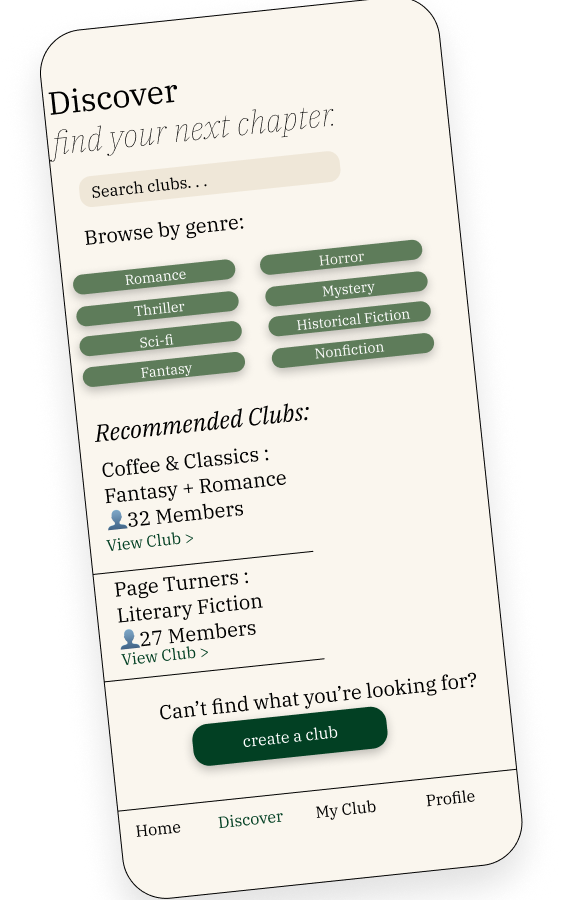
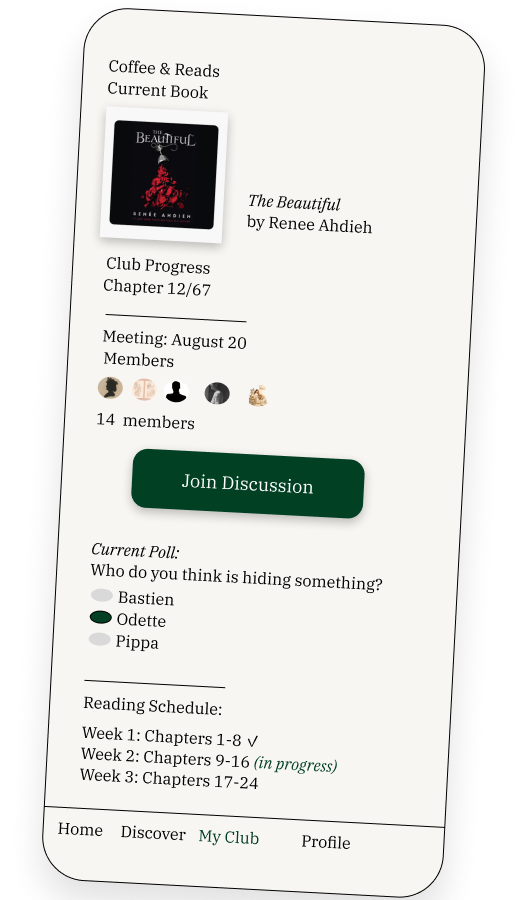
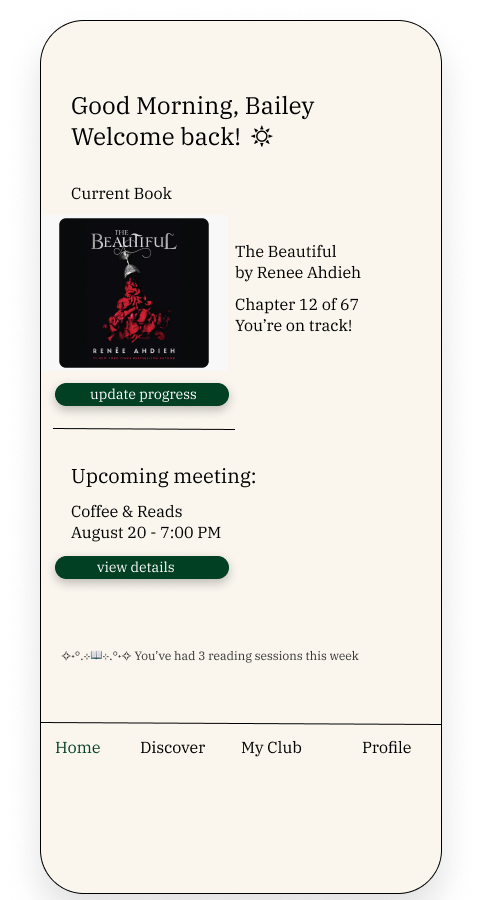
After validating the user journey and research insights, I translate the concepts into high-fidelity designs. The goal was to create a modern, intuitive experience that made book clubs easier to organize, participate in, and enjoy.
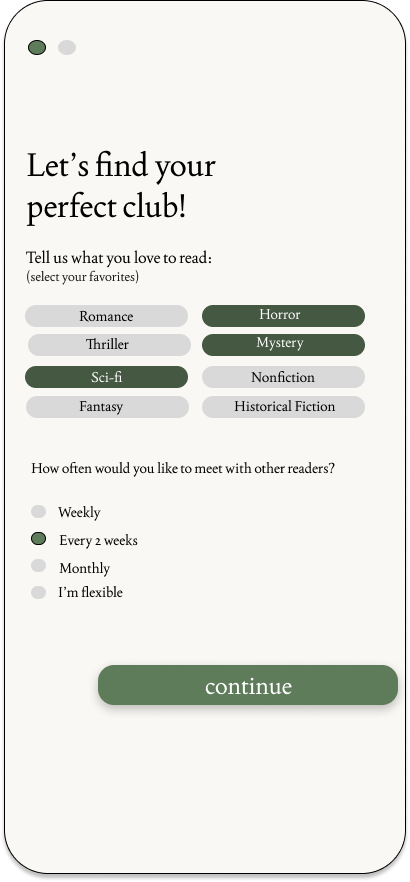
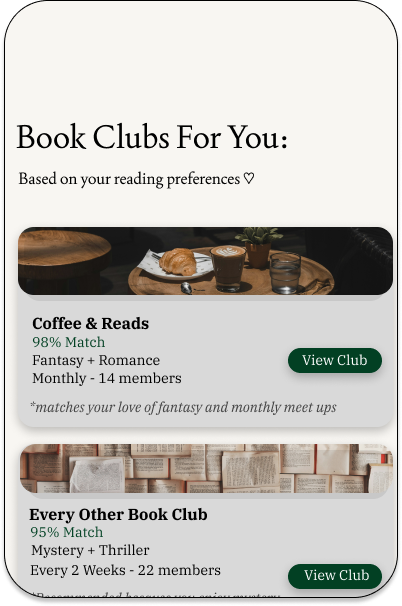
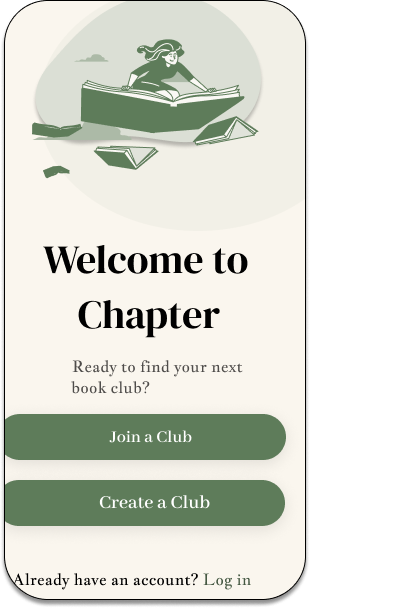
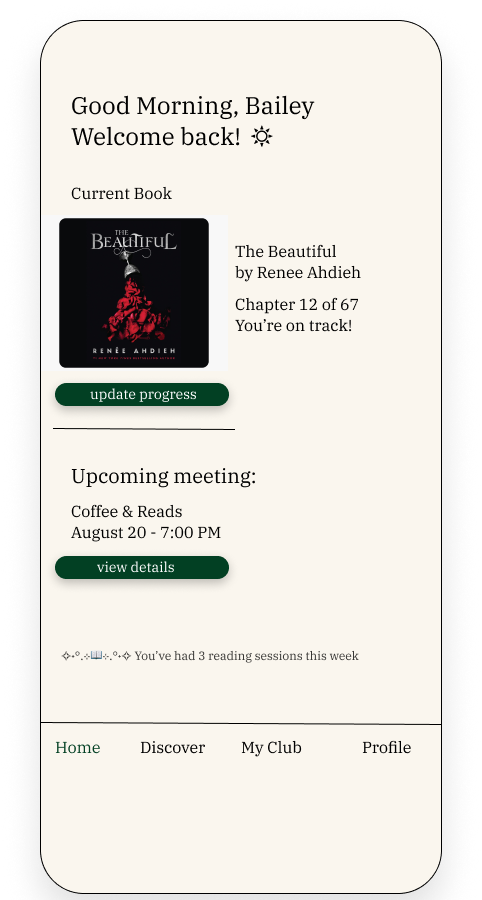
The interactive prototype demonstrates the complete user experience, from onboarding to participating in a book club. It was created to validate navigation, inter-actions, and the overall user flow before development.
Prototype:
Reflection
Project Outcome
Chapter evolved from an initial idea that I had from my very own book club.
It began as an idea into a complete UX case study focused on improving the book club experience.
Through research, user flows, prototyping, and interface design, I created a solution that brings reading progress, discussions, scheduling, and club discovery into one place.
What I learned:
Research should guide design decisions rather than assumptions
Simplicity often brings a better user experience
Iteration improves usability and visual designs
Consistency across screens creates a stronger product
This product strengthened my UX research, interactive design, and prototyping skills while reinforcing the importance of designing around real user needs.